


Snooker, Decoded: Why 147 Is the Loneliest Number in Sports
A 147 break is the standard maximum a player can compile in snooker without the benefit of a free ball. To make one, a player must pot all 15 reds with the black after each red, then clear the six colours in ascending order, producing exactly 147 points in a single visit. Joe Davis made the first officially ratified maximum against Willie Smith at Leicester Square Hall in London on January 22, 1955, while Xiao Guodong’s maximum at the 2026 Shanghai Masters became the 246th recognized professional 147 on July 28, 2026. Even as maximums have become more frequent in the modern game, a 147 break remains far from routine.
The importance of the maximum break in snooker comes from the precision required across an entire visit rather than from one spectacular shot. A player has to keep potting, control the cue ball and choose a route that preserves access to the black as the reds disappear. The result is a test of scoring knowledge, positional play, nerve and execution compressed into one sequence. This article explains how a 147 break is scored, how the record developed, why Ronnie O’Sullivan’s 1997 maximum still stands apart, and why the achievement continues to be compared with perfection in other sports.
What Counts as a 147? The Scoring Breakdown
The calculation behind a 147 break is straightforward, but the route is rigid. Each red is worth one point and must be followed by a colour while reds remain on the table. Because the black is worth seven points, the highest-value route is to pot a red and then the black 15 times. That sequence contributes 120 points: 15 from the reds and 105 from the 15 blacks.
After the final red and its black, the remaining six colours must be taken in order: yellow for two points, green for three, brown for four, blue for five, pink for six and black for seven. Those balls add another 27 points, taking the total from 120 to 147. A standard 147 break therefore requires 36 scoring pots in one visit, with no lower-valued colour taken after any red. Guinness World Records’ explanation of the first official 147 sets out the same sequence.
That explains why a complete clearance is not automatically a maximum break in snooker. Taking the pink after even one red instead of the black reduces the highest available total by one point, while taking the blue reduces it by two. Once a lower colour is used, 147 is no longer available from the normal position. The 147 break is therefore not simply about clearing the table; it is about clearing it through the highest-value standard route.
The word “maximum” needs one qualification because the free-ball rule can create a score above 147. If a player is left snookered after an opponent’s foul before any red has been potted, another ball can be nominated as a free ball and treated as an additional red. Jamie Burnett used that route during qualifying for the 2004 UK Championship against Leo Fernandez, compiling a 148 that became the first break above 147 recorded in professional competition. The extra point was possible because the foul effectively created a sixteenth scoring red.
The theoretical ceiling with a free ball is 155: an extra red worth one point and an extra black worth seven before the normal sequence begins. Breaks of 155 have been recorded outside ordinary main-tour ranking play, including Mark Rowing in Doncaster in 1988, Alex Higgins at a Belfast charity event in 1996 and Jamie Cope in 2005. In professional competition, Ronnie O’Sullivan set a record above the standard maximum on March 20, 2026, when a free-ball opportunity helped him compile 153 against Ryan Day at the World Open. The distinction is important: a 147 break remains snooker’s perfect standard clearance, while a higher break requires a special free-ball situation.
A maximum attempt also tends to emerge gradually rather than being the only objective from the opening shot. Early in a frame, the priority is normally to score and win the frame, not to force the black after every red regardless of position. Once several reds and blacks have gone and the table remains open, the possibility becomes obvious to the player, opponent and audience. From that point, every positional decision has to preserve both the break and the 147 break.
The History of the First 147
The earliest officially ratified landmark belongs to Joe Davis, whose career helped establish professional snooker. On January 22, 1955, Davis made a 147 break against Willie Smith during an exhibition at Leicester Square Hall in London. Guinness World Records recognises it as the first official 147 break in snooker. The achievement came long before televised snooker developed the mass audience it would attract in later decades.
John Spencer came close to establishing the tournament benchmark in 1979 at the Holsten Lager International. He compiled a 147 in competition, but the break was never officially ratified because the table had not been checked against the required official template. The episode shows why an “official” 147 break depends on more than the balls disappearing in the correct order. Equipment standards and formal ratification are part of the record.
The recognised professional breakthrough arrived on January 11, 1982. Steve Davis made the first televised 147 break at the Lada Classic in Oldham, with John Spencer sitting in the opposite chair. Davis also received a Lada car for the achievement, an early example of sponsors attaching a separate reward to the maximum. Television now allowed viewers to watch the pressure build pot by pot instead of learning about the feat after it had happened.
That visibility helped make 147 a number casual viewers could understand immediately. The sequence was simple enough to follow — reds with blacks, then the colours — even if the technique behind it was not. From Steve Davis onward, the 147 break became both an elite technical accomplishment and a ready-made television milestone. It had moved from the record book into the live spectacle of professional snooker.

O’Sullivan’s Record-Breaking Five Minutes
Ronnie O’Sullivan’s 147 against Mick Price at the 1997 World Championship remains the defining example of a maximum made at extreme speed. He completed it at the Crucible Theatre on April 21, 1997, when he was 21 years old. The official time is now five minutes and eight seconds from his first strike of the cue ball to the final pot, making it the fastest 147 break in professional snooker. For a sequence requiring 36 scoring pots and constant cue-ball movement, the pace remains extraordinary.
The break was initially reported as five minutes and 20 seconds, and that figure survived for years. A 2017 review of BBC footage recalculated the time from the moment O’Sullivan first struck the cue ball to pot the opening red, producing the corrected 5:08 now recognised by Guinness and World Snooker. O’Sullivan had already held the record; the review simply established that the 147 break had been even faster than first believed.
Looking back at the footage for Eurosport 25 years later, O’Sullivan said, “I didn’t have the record on my mind at the time. I thought there was a maxi on.” That helps explain the rhythm of the break. He was not visibly managing a stopwatch or chasing a speed record, but making immediate decisions about angles, red selection and cue-ball position while trying to complete the opportunity in front of him.
There was also serious money attached to every remaining pot. O’Sullivan earned £147,000 for the maximum itself and £18,000 for the tournament’s highest break, taking the total associated with the clearance to £165,000. When revisiting the frame, he remembered the pressure rather than describing the 147 break as effortless. In Eurosport’s retrospective on the 1997 maximum, he said: “I was petrified and I was in bits!”
His explanation of the pace was just as revealing. O’Sullivan said, “The method in the madness was to go as fast as I could and override the thoughts in the brain.” Instead of slowing down as the maximum approached, he used speed to keep the pressure from interrupting his routine. By the final colours, the record, the money and the 147 break were all in play, but his response was to give himself less time to think about them.
O’Sullivan’s relationship with the maximum did not end at the Crucible in 1997. Guinness World Records now lists him with 17 competitive 147 breaks, the most by any player. His 16th and 17th came in the same session against Chris Wakelin at the Saudi Arabia Snooker Masters on August 15, 2025, making him the first player to compile two maximums in one session. At 49 years and 253 days, he also became the oldest player to make a professional 147 break.
The gap between those landmarks illustrates unusual longevity. O’Sullivan’s first Crucible maximum was made at 21; 28 years later he was still extending the career record. His technique and the professional circuit around him changed, but the demands of a 147 break did not. Each maximum still required 15 reds with 15 blacks followed by a complete colour clearance.
The Crucible’s 147 Club
The World Snooker Championship has been staged at the Crucible Theatre since 1977, but the venue did not see a maximum immediately. Cliff Thorburn made the first Crucible 147 in 1983, becoming the first player to complete the standard maximum at the sport’s most important tournament. A World Championship 147 break carries an additional layer of pressure because it happens inside the long matches that define careers rather than in an isolated skills challenge.
By April 25, 2025, 15 maximum breaks had been made at the Crucible by 11 different players. Mark Allen produced the 15th during his second-round match against Chris Wakelin. Ronnie O’Sullivan and Stephen Hendry share the record for the most 147 breaks at the World Championship, with three each. O’Sullivan made his in 1997, 2003 and 2008; Hendry’s came in 1995, 2009 and 2012.
The list also shows how rare a Crucible maximum remains. Great champions have spent years at the venue without making one, while players have also produced a 147 break in matches they ultimately lost. A maximum guarantees one frame, not the match, and that distinction matters in long-format snooker. The achievement sits inside the larger competitive problem rather than replacing it.
Mark Selby created a separate record on April 30, 2023, when he made the first 147 break in a World Championship final. He compiled it against Luca Brecel during the second session, with the title match under way. Selby still lost the final 18-15. The result is a useful reminder that even snooker’s perfect scoring visit cannot decide a multi-session contest on its own.
The Crucible can also change the strategic context of a maximum attempt. Early in a close frame, a player may choose a safer colour if it improves the chance of winning rather than preserving a maximum that has barely begun. Only after enough points and blacks have accumulated does the 147 break become a serious secondary objective. Then one positional error, one kick or one missed pot can end the possibility immediately.
That is why the Crucible list matters beyond raw statistics. It spans several generations of break-building and remains short enough for each addition to carry historical weight. A player who makes a maximum anywhere joins professional snooker’s wider record; a player who makes a 147 break at the Crucible also joins one of the World Championship’s most recognisable clubs.
Why a 147 Is So Hard
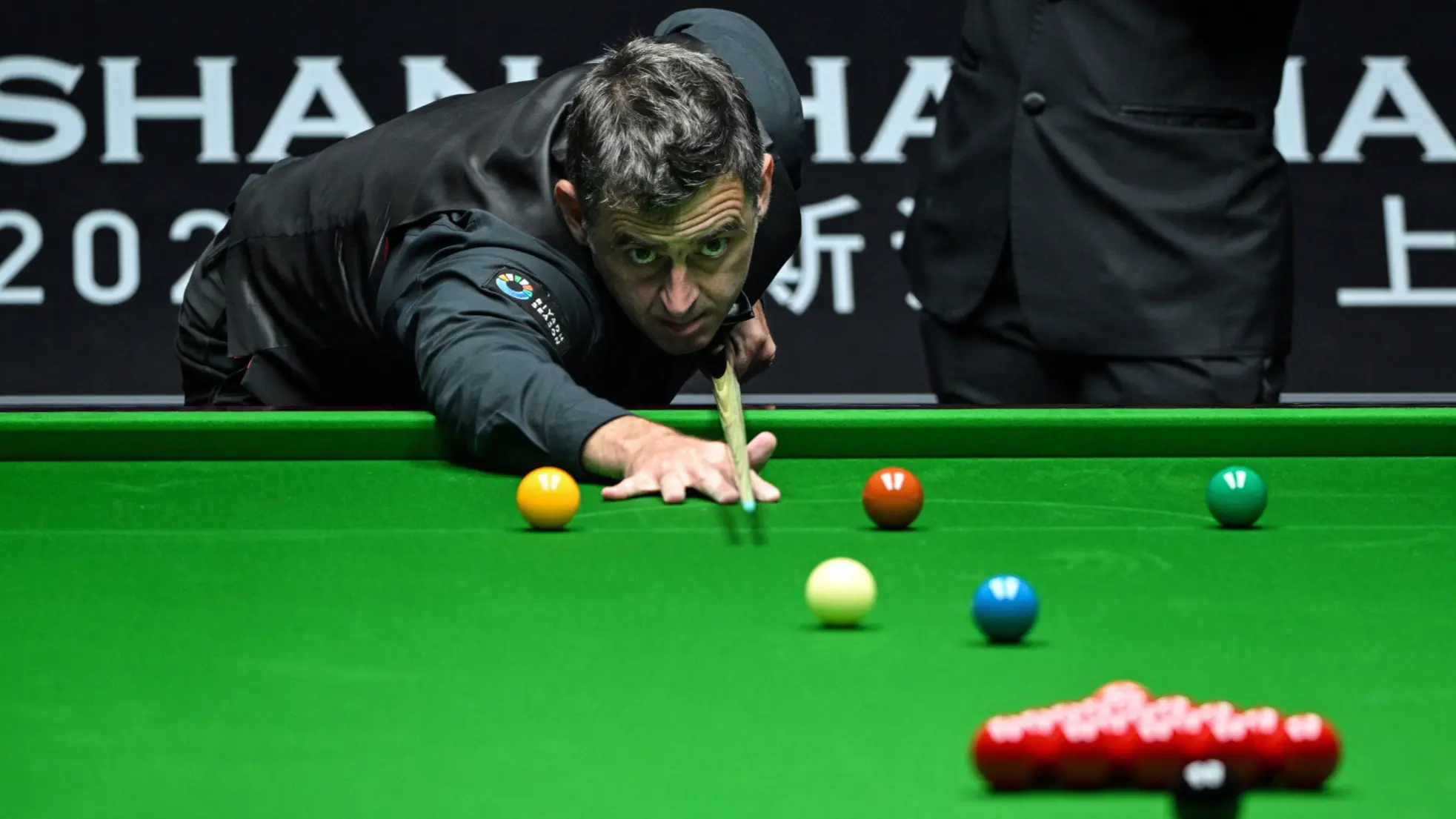
The difficulty of a 147 break starts with the fact that successful potting is only half the task. The player must control where the cue ball finishes after almost every shot so the next red is available and the black can be reached again. A pot can disappear cleanly and still be a poor maximum-break shot if the cue ball finishes on the wrong side of the next red or leaves an awkward angle on the black. Position has to be planned continuously.
The black creates much of that difficulty because it must be taken after every red. Reds can spread into awkward areas, block one another or finish near cushions, while the black has a fixed spot and limited useful approach angles. A player has to decide which reds to remove, which to preserve as insurance and when to disturb a cluster without losing control. The best 147 breaks can look simple precisely because these problems are solved before they become obvious.
Pressure grows with the score. At 40 or 50, the player may still be focused mainly on winning the frame; at 80 or 90, the maximum is clearly alive; after the last red and black, only the colours stand between the player and 147. The shots do not become technically easier, but the cost of a miss becomes greater because so much work has already gone into the attempt. O’Sullivan’s description of being “petrified” during the fastest 147 break is a reminder that even the most fluent examples contain pressure.
The feat is often compared with a nine-dart finish in darts and a hole-in-one in golf. No universal statistical comparison can settle the argument because the sports involve different conditions and different populations of players. The debate is still revealing, however, because elite darts players have highlighted how many moving parts a maximum break in snooker contains. Michael van Gerwen said on JaackMaate’s podcast:
“I think the 147 is the hardest, one hundred percent.”
Luke Littler reached the same ordering when speaking to the Daily Mail. “Hole-in-one, easiest. Nine-darter second and then 147 hardest,” he said. Those are opinions rather than scientific proof, but they point to what makes a 147 break distinctive: the table changes after every shot. The player has to execute the shot and shape the next problem at the same time.
There is also no realistic way to fluke an entire maximum. A fortunate cannon can help, but luck cannot supply 36 scoring pots and the positional control connecting them. That sustained requirement is why the professional total can rise without making the feat ordinary. Modern players make more maximums, but a 147 break still demands a standard of break-building that very few players can reproduce on command.
The Money and the Politics of a 147
Prize money has always shaped the public story around the 147 break, even though it does not change the scoring requirement. O’Sullivan’s 1997 World Championship maximum is the clearest example: £147,000 was available for the maximum and another £18,000 for the tournament’s highest break. That gave the closing colours an obvious financial consequence, and O’Sullivan later made clear that he knew how much was at stake.
The incentives have not remained constant. Different eras have used fixed maximum prizes, rolling bonuses, tournament-specific awards and broader bonus schemes, so two players can make exactly the same 147 break in different seasons and receive very different rewards. That has fed debate about whether a player should pursue the maximum when the prize is relatively small or choose the safest route to winning the frame. The sporting requirements stay fixed while the commercial context changes.
O’Sullivan’s own retrospective on 1997 makes the same relationship between reward and pressure clear. “All sorts can go wrong. There was plenty of money on the line there!” he told Eurosport while watching the break back. The comment captures the contradiction: a large bonus gives a player more reason to pursue the maximum while making the final balls more significant.
The economics of a 147 also belong to a wider story about how professional snooker is promoted and governed. Promoters benefit from maximum attempts because they create immediate drama, sponsors can attach bonuses to them, and players still have to balance those incentives against match strategy. That subject also leads toward a separate issue for The Sports Manual: snooker’s history of match-fixing investigations and betting-related misconduct. That topic deserves its own evidence and article rather than being folded into the history of the maximum break.
Quick Rules Recap + What to Read Next
A maximum break in snooker is easy to describe even if it is exceptionally difficult to complete. The standard route is fixed from the first red to the final black, and any lower-valued colour after a red takes 147 off the table. A free ball can create a break above 147, but that is a special rules situation rather than the normal maximum sequence.
- Pot a red for 1 point, then the black for 7 points, and repeat that sequence for all 15 reds.
- Fifteen reds plus 15 blacks produce 120 points.
- After the last black, pot yellow, green, brown, blue, pink and black in that order.
- The six colours add 27 points, producing the standard 147 break.
- A free ball awarded after a foul can create the possibility of a break above 147.
- Ronnie O’Sullivan holds the competitive career record with 17 maximums and the professional speed record at 5 minutes 8 seconds.
- Ronnie O’Sullivan and Stephen Hendry share the World Championship maximum record with three each.
- Mark Selby’s 2023 maximum remains the only 147 break made in a World Championship final.
The 147 break endures because it is simple to understand and extremely difficult to execute. The arithmetic never changes, but the route through 36 scoring pots demands enough cue-ball control that even elite professionals cannot treat a maximum as routine. From Joe Davis’s officially ratified exhibition break in 1955 to Steve Davis’s televised maximum in 1982, O’Sullivan’s record speed in 1997 and the larger modern professional list, the history of the maximum break in snooker also tracks the development of elite break-building.
For more sports explainers, history, tactics and analysis, visit The Sports Manual. You can also follow new articles and updates through The Sports Manual WhatsApp Channel.