

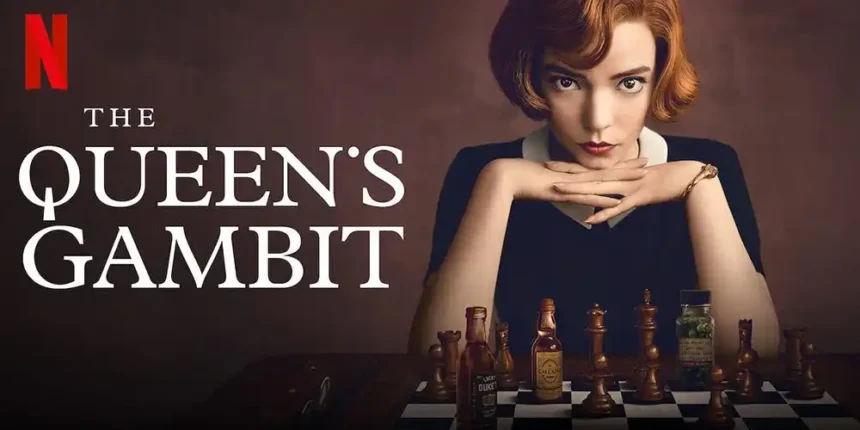
The Queen’s Gambit Effect: How Netflix Sparked a Global Chess Boom
When The Queen’s Gambit premiered on Netflix on October 23, 2020, few expected a seven-episode drama about a fictional chess prodigy to produce a measurable change in the real chess world.
Within its first 28 days, Netflix reported that 62 million households had chosen to watch the series. It entered the platform’s Top 10 in 92 countries and reached No. 1 in 63, making it Netflix’s biggest scripted limited series at the time. Walter Tevis’s 1983 novel returned to The New York Times bestseller list 37 years after publication, while Google searches for “how to play chess” reached a nine-year high.
The effect was also visible away from Netflix. Chess.com began registering more than 100,000 new members a day during part of November, roughly five times its usual rate. Retailers reported sharp increases in demand for chess sets, and established chess organizations saw new interest from people who had never previously followed the game.
The Queen’s Gambit did not create the online chess boom by itself. Pandemic lockdowns and streaming culture had already pushed the game toward a larger digital audience. What the series did was accelerate that growth and give chess a cultural reach that statistics from tournament halls alone could not explain.
This is how a fictional player became part of real chess history.
Table of Contents
- What The Queen’s Gambit Actually Is
- The Viewership Numbers
- The Chess.com Surge
- Chess Sets, Search Traffic and Retail Demand
- The Boom Had Already Started Before Netflix
- Garry Kasparov and the Chess Behind the Series
- The Nona Gaprindashvili Controversy
- Did the Queen’s Gambit Chess Boom Last?
- How the Series Changed Chess’s Public Image
- Why The Queen’s Gambit Matters in Chess History
- Closing Reflection
1. What The Queen’s Gambit Actually Is
The Queen’s Gambit is based on Walter Tevis’s 1983 novel of the same name. Netflix adapted it into a seven-episode limited series created by Scott Frank and Allan Scott, with Frank also serving as writer and director.
Anya Taylor-Joy plays Beth Harmon, a fictional orphan who discovers an unusual talent for chess while growing up in Kentucky. The story follows her from childhood tournaments to major international competition during the 1950s and 1960s.
Chess provides the structure of the story, but the series is not simply about tournament results. Beth’s development is tied to addiction, isolation, ambition, fame and the restrictions placed on women in the competitive culture of the period.
The final stages of the story take her into competition with leading Soviet players, drawing on an era when the Soviet Union held extraordinary influence over world chess.
That historical setting immediately invited comparisons with one of the sport’s most famous real events. Twelve years after the fictional period in which Beth’s Moscow tournament is set, Bobby Fischer challenged Boris Spassky in Reykjavík in the championship that became known as the Match of the Century.
The Sports Manual’s account of Fischer vs. Spassky in 1972 explains how an American challenger and Soviet champion turned a world title match into an international Cold War story.
The Queen’s Gambit borrowed some of that atmosphere without pretending Beth Harmon was a historical person. The challenge for its creators was making the fictional story believable inside a chess world that many viewers already knew in considerable detail.
That required the chess itself to be convincing.
2. The Viewership Numbers
The scale of The Queen’s Gambit became clear a month after its release.
Netflix reported that 62 million households had watched the series during its first 28 days. Under Netflix’s measurement system at the time, this meant a household had chosen to watch at least two minutes of the program.
The series reached Netflix’s Top 10 in 92 countries and ranked No. 1 in 63.
Those figures made The Queen’s Gambit the company’s biggest scripted limited series at that point. The distinction matters because it was sometimes reported more broadly as Netflix’s most-watched program of any kind, which was not the same claim.
The show’s influence also extended back to its source material.
Walter Tevis’s novel entered The New York Times bestseller list 37 years after its original publication. Google searches for “how to play chess” reached their highest level in nine years, while broader searches for chess rose sharply around the world.
The timing makes the relationship difficult to ignore.
The Queen’s Gambit did not merely attract people who already followed grandmaster tournaments. It brought chess vocabulary, openings, boards and clocks in front of an audience that might otherwise never have watched a serious chess broadcast.
That audience then began searching for the game itself.
The difference between television popularity and sporting participation is important. Many successful sports films and television shows attract viewers without creating a measurable increase in people actually playing the activity.
The Queen’s Gambit produced evidence of both.
3. The Queen’s Gambit and the Chess.com Surge
Online chess provided some of the clearest evidence that interest in the series was moving from spectatorship into participation.
During the third week of November 2020, Chess.com was receiving more than 100,000 new registrations each day. That was approximately five times the site’s normal rate at the time.
The platform’s previous weekly record had been 378,000 new registrations during the middle of March 2020, when pandemic lockdowns were beginning across many countries. After The Queen’s Gambit appeared, the scale increased again.
Business Insider documented the Chess.com registration surge after The Queen’s Gambit, including the 100,000-per-day figure and the comparison with the platform’s pre-series average.
Nick Barton, then Chess.com’s director of business development, gave AFP another measure of the change.
“Since the release of ‘The Queen’s Gambit’ we have seen roughly 2.5 million new members join.“ — Nick Barton
The AFP report published by Gulf Times also said new daily registrations had risen by 400 percent. Barton added that the site was setting new company records for member registrations on nearly every day of November.
Chess.com responded directly to the television phenomenon by creating Beth Harmon computer opponents at different ages and playing strengths. Someone who had just finished the series could therefore open an account and immediately play against a digital version of its central character.
That connection between television and participation reduced the normal barrier between becoming interested in chess and actually trying it.
A person did not need to buy a set, locate a club or find another beginner.
They could start a game immediately.
4. Chess Sets, Search Traffic and Retail Demand
The surge was not limited to online accounts.
Physical chess products also became noticeably more popular after The Queen’s Gambit appeared.
eBay reported a 215 percent increase in sales of chess sets and accessories following the show’s release. Wooden sets were particularly popular, fitting the series’ carefully designed mid-20th-century tournament aesthetic.
The demand was significant because The Queen’s Gambit did not present chess as a futuristic digital game. Its visual identity relied heavily on wooden pieces, mechanical clocks, tournament halls and carefully arranged boards.
Viewers were not only interested in playing chess. Some were interested in recreating the physical appearance of the chess shown on screen.
The AFP account published by Gulf Times reported another useful measure: worldwide Google searches for “chess” had reached their highest level in 14 years.
That is separate from Netflix’s statistic that searches for “how to play chess” reached a nine-year high. Together, the two measurements point toward both general curiosity and beginner-level intent.
The Queen’s Gambit influenced chess in several measurable ways. It attracted a large television audience, drove more people to search for the game online, increased registrations on major chess platforms, and contributed to stronger demand for chess sets and beginner resources.
That combination is what made the so-called “Queen’s Gambit effect” significant. The impact was not confined to Netflix’s viewing figures; it appeared across search trends, online chess communities, retail sales and learning interest.
At the same time, the series should not be treated as the sole cause of the 2020 chess boom. Online chess had already been growing rapidly during the pandemic, helped by lockdowns, streaming and events such as PogChamps. The Queen’s Gambit accelerated that existing momentum and introduced chess to a much broader mainstream audience.
5. It Wasn’t Just The Queen’s Gambit — The Pandemic Context
By October 2020, online chess was already experiencing an unusual year.
COVID-19 restrictions had disrupted traditional over-the-board competition while creating ideal conditions for a game that could be played almost perfectly online. Two players did not need to occupy the same room, country or even continent.
Chess.com had already recorded its previous registration peak during the first major lockdown period in March. By November, the platform’s growth had been accelerating for months.
Streaming was another important factor.
Grandmaster Hikaru Nakamura had built a major audience on Twitch, where chess could be presented differently from a traditional championship broadcast. Viewers watched elite players compete, teach, react to games and interact with online personalities.
Then came PogChamps.
The first tournament began in June 2020 and placed popular Twitch creators into a chess competition after coaching from experienced players. The official Chess.com broadcast reached more than 85,000 concurrent viewers at its peak, while co-streams pushed the total concurrent audience beyond 150,000. Chess.com later named it its event of the year.
By the time The Queen’s Gambit premiered, the infrastructure for a larger chess audience already existed. The platforms were there. The streamers were there. Millions of people were spending more time online. Chess had become unusually well suited to pandemic life.
The Queen’s Gambit should therefore be understood as an accelerant rather than the sole origin of the 2020 chess boom.
Business Insider’s comparison makes the point clearly. The platform had already set a weekly record of 378,000 registrations during the March lockdown period. The series then helped push daily registrations beyond 100,000 during parts of November.
The distinction matters because it makes the story more credible.
Chess was already moving toward a larger digital audience. The Queen’s Gambit exposed that developing ecosystem to millions of people at exactly the right moment.
The result was far larger than either trend might have produced alone.
6. Garry Kasparov and the Chess Behind The Queen’s Gambit
One reason The Queen’s Gambit survived close scrutiny from chess players was that the production treated the chess itself seriously.
Former world champion Garry Kasparov served as a technical consultant alongside respected American chess teacher Bruce Pandolfini.
That choice carried obvious authority.
Kasparov had been world champion from 1985 until 2000 and had spent much of his career competing against the strongest Soviet and post-Soviet players in the world. He understood the tournament culture the series was trying to reproduce.
He also had his own place in the history of chess and technology. In 1997, Kasparov lost his famous rematch against IBM’s Deep Blue, the first time a reigning world champion had been defeated by a computer in a match under standard tournament conditions.
The Sports Manual’s detailed account of Deep Blue vs. Kasparov explains why that event became such an important moment in both chess and computing history.
For The Queen’s Gambit, Kasparov’s role was different. He helped the production find real chess ideas that could support a fictional narrative.
US Chess reported that he selected games for important scenes and reworked positions to fit Beth Harmon’s story. The federation’s account of Kasparov and Scott Frank discussing The Queen’s Gambit provides a useful look at that process.
The climactic match between Beth and Soviet champion Vasily Borgov is a particularly strong example.
Kasparov based the game on a real encounter between Vassily Ivanchuk and Patrick Wolff at the 1993 Biel Interzonal. The actual game was drawn. For the series, the position and later continuation were adapted so that Beth could produce the decisive victory required by the story.
Chess.com has documented how the series reused and adapted real historical games. The final Borgov game follows the Ivanchuk-Wolff encounter for much of its course before departing from it.
The approach gave the series something many fictional sports stories lack: the important actions remained plausible to specialists.
Kasparov described the result in direct terms:
“It is as close as possible to the authentic atmosphere of chess tournaments.“ — Garry Kasparov
The production also paid attention to smaller details.
Pandolfini worked with actors on how to move pieces, use a chess clock and behave at a tournament board. Kasparov supplied knowledge about the Soviet chess environment and major competitive scenes.
RFE/RL later examined how Kasparov helped make The Queen’s Gambit believable, including his work on both the chess and tournament atmosphere.
The result was not perfect historical reconstruction. Games on television necessarily moved faster than serious classical games normally do, and dramatic timing occasionally took priority over tournament realism.
But the underlying chess was real enough that experienced players could recognize it.
That gave the wider audience confidence that the series respected its subject.
7. The Nona Gaprindashvili Controversy
The Queen’s Gambit was praised for its chess accuracy, but one line in its final episode created a serious factual and legal dispute.
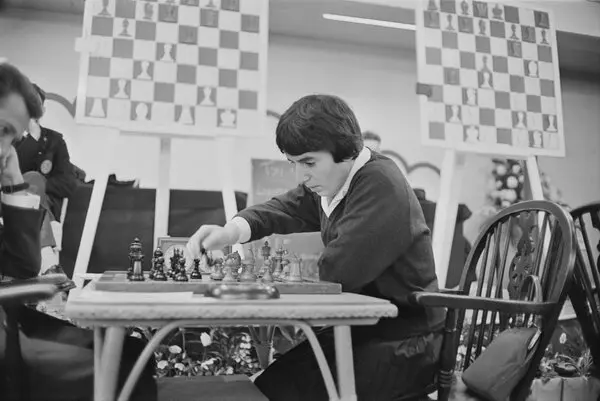
During Beth’s tournament in Moscow, a commentator refers to the real Georgian chess champion Nona Gaprindashvili and says she had “never faced men.”
That statement was false.
Gaprindashvili had competed against male players during her career long before the period represented in the scene. She became Women’s World Champion in 1962 and remained champion until 1978. In 1978, she also became the first woman to receive the full FIDE Grandmaster title.
FIDE’s own historical record describes Gaprindashvili as a pioneer who regularly competed successfully in male-dominated tournaments.
The problem was especially striking because The Queen’s Gambit used Gaprindashvili’s real name while making a fictional statement about her career.
In September 2021, she filed a defamation lawsuit against Netflix seeking more than $5 million in damages.
The dispute was not over whether Beth Harmon was fictional. It concerned what a fictional television series could say about a real living person.
Netflix argued that the program was a fictional work and that viewers would understand the scene in that context. Gaprindashvili’s lawyers argued that using her real identity while making a false statement about her competitive record damaged the reputation she had built as a pioneer in women’s chess.
Law Street Media’s coverage of the Queen’s Gambit defamation dispute followed the legal arguments surrounding the case.
In January 2022, U.S. District Judge Virginia Phillips allowed the defamation claim to proceed. The court rejected the idea that a fictional work was automatically protected from a claim involving an allegedly defamatory statement about a real person.
That did not amount to a final finding that Netflix was legally liable. It meant the case could continue.
Netflix appealed.
Before the appeal reached a final decision on the merits, the two sides settled in September 2022 for undisclosed terms. Law Street reported that mediation led to a settlement and stipulated dismissal.
The controversy is important because it complicates the usual account of The Queen’s Gambit as simply a positive moment for women in chess.
The series unquestionably placed a female chess player at the center of one of television’s biggest releases of 2020. Gulf Times also reported that Chess.com saw more women registering than usual following the show’s release.
At the same time, its use of a real female champion produced one of the most significant factual disputes attached to the series.
Both parts belong in the historical record.
8. Did The Queen’s Gambit Chess Boom Last?
The immediate chess boom is well documented.
The harder question is whether it disappeared once the television series left the center of popular culture.
No single statistic can isolate the long-term impact of The Queen’s Gambit. Chess continued to benefit from several other forces after 2020, including streaming, short-form video, online creators, Magnus Carlsen’s continued prominence, Hikaru Nakamura’s online popularity, major cheating controversies and new competitive formats.
It would therefore be misleading to attribute every later increase in chess participation to one Netflix series.
However, the wider online audience did not return to its pre-2020 size.
Chess.com announced in February 2026 that it had reached 250 million registered members. The platform had reached 100 million only in December 2022.
The scale of actual play also remained enormous. Chess.com reported that its members played more than six billion games during 2025.
Those figures do not prove that individual viewers who discovered chess through The Queen’s Gambit remained active six years later.
They establish something more limited but still important: the wider online chess expansion that surrounded the series was not a temporary spike followed by a complete return to earlier levels.
By 2026, online chess was operating at a much larger scale than it had before the pandemic and The Queen’s Gambit.
The series should therefore be viewed as one major stage in a broader transformation. It did not single-handedly create modern online chess.
It helped push chess into a larger cultural market at exactly the moment that the digital game was ready to receive that audience.
9. How The Queen’s Gambit Changed Chess’s Public Image
Statistics explain the scale of the boom, but they do not fully explain why The Queen’s Gambit mattered.
The series changed how chess could be presented to a mass audience.
For decades, mainstream depictions of top-level chess often relied on familiar stereotypes. The elite player was portrayed as socially isolated, mathematically gifted, emotionally cold or inaccessible to ordinary people.
Beth Harmon still belongs partly to the prodigy tradition, but the series presented competitive chess as visually interesting, socially complex and culturally fashionable.
The tournament halls were carefully designed. The boards and clocks mattered. The clothing mattered. The rivalries mattered.
The viewer did not need to understand why a particular rook move was strong to understand that the position mattered to the characters.
That distinction helped solve one of chess broadcasting’s oldest problems: serious chess is difficult to explain quickly to a non-player.
The Queen’s Gambit made the competitive environment understandable without turning every scene into a lesson.
Its female protagonist was also significant.
The real chess world has historically been heavily male at both participation and elite levels. The series did not solve that imbalance, but it gave millions of viewers a different image of who could occupy the center of a chess story.
The Gulf Times report noted that Chess.com’s Nick Barton saw more women registering than usual after the series appeared.
That does not establish a permanent demographic transformation on its own.
It does show that representation and participation were connected closely enough for one of the world’s largest chess platforms to notice the change.
For a wider account of how chess moved from its ancient origins into streaming, computers and modern global culture, The Sports Manual’s history of chess and its legends places The Queen’s Gambit within the game’s much longer development.
10. Why The Queen’s Gambit Matters in Chess History
Chess has experienced major surges of public attention before.
The 1972 Fischer-Spassky World Championship turned the game into a Cold War spectacle. Kasparov’s battles with IBM’s Deep Blue in the 1990s connected chess to public debates about computing and artificial intelligence.
11. Closing Reflection
The Queen’s Gambit premiered on October 23, 2020, as a television adaptation of a 37-year-old novel.
Within a month, Netflix was reporting 62 million households watching it. Chess.com was recording days with more than 100,000 new registrations. Search interest was rising, retailers were selling more boards, and people who had never followed competitive chess were asking how to play.
Those numbers matter because they make the Queen’s Gambit effect unusually easy to document.
The series arrived during an online chess boom that had already been accelerated by pandemic restrictions, Twitch streaming and events such as PogChamps. It did not create those conditions, but it expanded their audience considerably.
Its influence also came with complications. The production earned respect for using real chess expertise and authentic games, while its inaccurate reference to Nona Gaprindashvili produced a defamation lawsuit that ended in a private settlement.
By 2026, the chess audience had continued growing well beyond the immediate period of the show. Chess.com had reached 250 million registered accounts, evidence that the digital expansion around the game was much larger than a short-lived television trend.
The most defensible conclusion is therefore not that The Queen’s Gambit single-handedly saved or reinvented chess.
It did something more specific.
It took a game that was already expanding online, presented it successfully to tens of millions of people, and accelerated one of the largest periods of public growth in modern chess.
For more long-form chess history, analysis and stories, follow The Sports Manual on Instagram, WhatsApp, LinkedIn, X and Medium.